
Active Warrants in Mecosta County
A warrant in Mecosta County is a signed court order. Judges and magistrates at the 77th District Court and the 49th Circuit Court issue them, and law enforcement agencies carry them out. The Mecosta County Sheriff's Office, the Big Rapids Police Department, and the Michigan State Police are the usual agencies that serve them. Charging often comes first: the Prosecuting Attorney reviews a police report, authorizes a charge, and the arrest warrant follows. Bench warrants come from a different path, issued directly by a judge when a person misses a hearing or fails to comply with a prior court order.
No official public website posts a full list of active Mecosta County warrants. Neither the Sheriff's Office nor the county court pages publish an open warrant roster, and that absence should be stated plainly rather than papered over with a third-party site. It is not a dead end. Warrant information still moves through several official channels, and each warrant type tends to sit with a specific court or agency. Statewide law enforcement systems such as LEIN update on their own schedule after a warrant is issued, recalled, or served, so a call to the issuing office returns the most current status.
How to Check for a Mecosta County Warrant
Because no online roster exists, checking a warrant means starting with the office most likely to hold it. For a person who may already have been arrested or transported, the Mecosta County Jail line is the fastest route and is answered around the clock. For a suspected bench warrant, the court that set the missed hearing is the place to call. The offices below are the verified official channels for warrant and custody questions in the county.
Mecosta County Jail
225 S. Stewart
Big Rapids, MI 49307
(231) 592-0156
Answered 24 hours a day
Sheriff Records and FOIA
225 S. Stewart
Big Rapids, MI 49307
(231) 592-0150
MCSO-FOIA@mecostasheriff.org
77th District Court
Room 118, 400 Elm Street
Big Rapids, MI 49307
(231) 592-0794
Criminal and traffic bench warrants
49th Circuit Court
Room 105, 400 Elm Street
Big Rapids, MI 49307
(231) 592-0780
Felony and probation warrants
Family support cases follow their own track. The Friend of the Court at (231) 592-0115 can issue a bench warrant when a party fails to appear at a court-ordered hearing or ignores a prior show-cause order in a custody or support matter. Sheriff incident records tie to a warrant through a Freedom of Information Act request, which needs the county FOIA form and administrative approval before release. Those requests go in person or by mail to 225 S. Stewart in Big Rapids or by email to MCSO-FOIA@mecostasheriff.org. County-wide public records that are not court files or sheriff reports route to FOIA Coordinator Mindy Taylor at 400 Elm Street. When a warrant results in a booking, the county jail roster and custody details sit on the Mecosta County inmate records side of the process.
Types of Warrants in Mecosta County
Warrants are not all the same, and the type shapes both where the record lives and how it gets resolved. Some follow a fresh criminal charge, while others punish a missed court date or a broken condition. Recognizing the category points a person to the correct court or agency and sets expectations about bond and next steps.
- Arrest warrant - Issued after a complaint and a finding of probable cause, authorizing law enforcement to take a named person into custody.
- Bench warrant - Issued by a judge after a failure to appear, contempt, or noncompliance with a prior order.
- Search warrant - Authorizes a search of a location, person, or property and is often sealed while an investigation is active.
- Probation violation warrant - Issued when a probationer is alleged to have broken the terms of supervision.
- Friend of the Court warrant - Follows a domestic-relations show-cause failure in a support, custody, or parenting-time case.
- Felony warrant - May begin in the 77th District Court and connect to the 49th Circuit Court after bindover, becoming part of the full criminal court record.
Information Needed to Check a Mecosta County Warrant
A clerk or deputy can move faster when the caller has the right identifying details ready. Because the check happens by phone, in person, or through a records request rather than a self-service portal, the person asking should gather the details a warrant record is indexed by before making contact. The items below are the fields that let staff locate the correct file and confirm its status.
| Detail | Why It Helps | Where It Appears |
|---|---|---|
| Full legal name | Primary way a warrant is indexed and matched to a person | Every warrant record |
| Date of birth | Separates people who share a name and confirms identity | Court and jail records |
| Case number | Points staff straight to the file and its history | Court notices and citations |
| Issuing court | Tells the caller which office holds the record | District, Circuit, or Friend of the Court |
| Underlying charge or order | Explains why the warrant was issued and how to resolve it | Charging document or court order |
What a Mecosta County Warrant Record Shows
When a court or the sheriff confirms a warrant, the record carries a consistent set of fields drawn from Michigan court practice. Knowing those fields in advance helps a person understand exactly what the staff are reading back and what still needs to be settled. A typical warrant entry includes the elements listed here.
- Name - The person the warrant names.
- Case number - The court file the warrant belongs to.
- Issuing court - The 77th District, 49th Circuit, Family Court, Friend of the Court, or another authority.
- Warrant type - Arrest, bench, probation violation, search, or show-cause.
- Underlying charge or order - The offense or the court order behind the warrant.
- Date issued - When the judge or magistrate signed it.
- Bond amount - The set bond, or a "no bond" notation.
- Conditions - Directions to appear, pay, report, comply, or surrender.
- Status - Active, recalled, quashed, served, or resolved.
- Agency - The sheriff, local police, state police, prosecutor, probation, or Friend of the Court.
Statewide Searches That Do Not List Warrants
Several official state systems look like warrant tools but are not. The Michigan State Police criminal history search, ICHAT, returns public conviction and criminal-history data, yet the state says plainly that warrant information and suppressed records are not available through it. MiCOURT Case Search may show a bench-warrant entry inside a public case history where a court publishes that event, but it is a case-search tool, not a standalone warrant list. Treating either one as a complete warrant check leads to false comfort.
The Michigan Public Sex Offender Registry is a separate public database that people sometimes confuse with a warrant search. It lists registered offenders and their profile details, not outstanding warrants. The registry search page at the Michigan Public Sex Offender Registry is the official entry point for those public records.
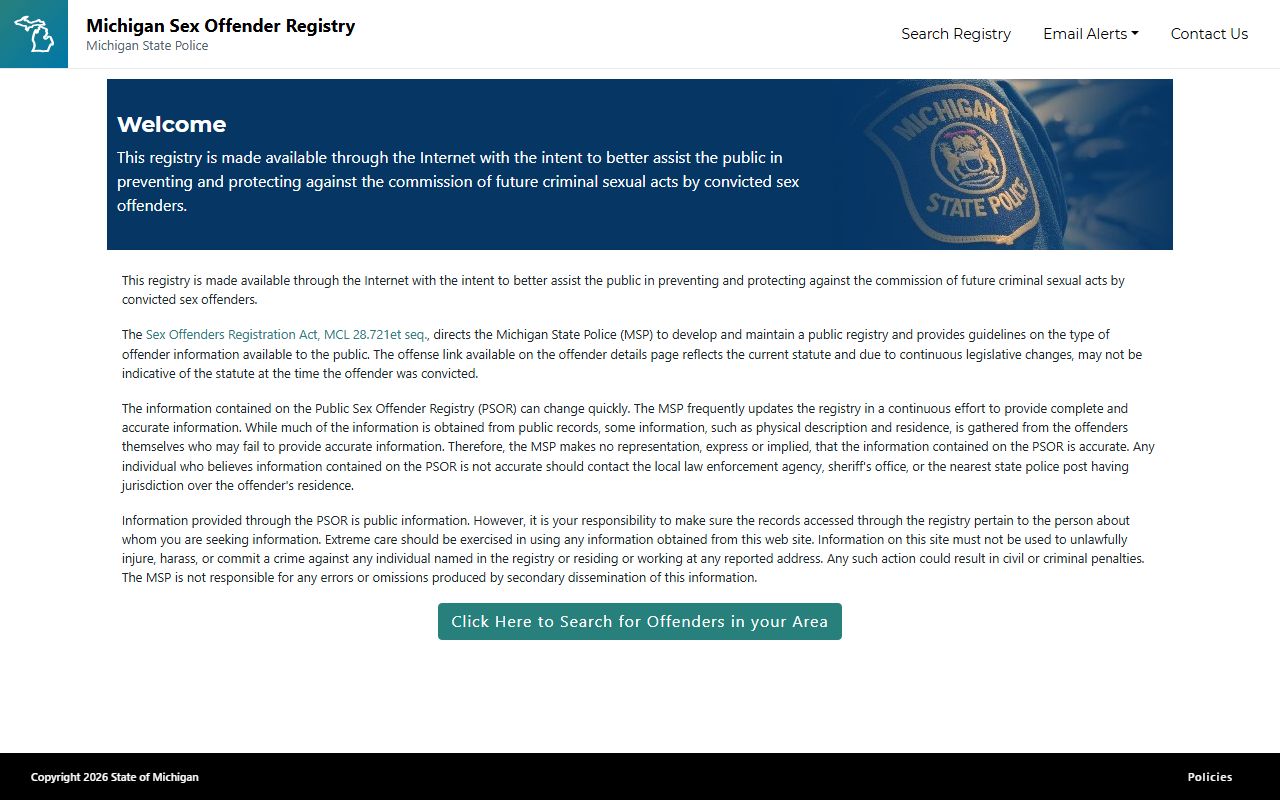
That registry answers a different question than a warrant check, so a Mecosta County resident verifying a warrant should still call the issuing court or the sheriff. Registry duties, fees, and the rules that govern who must register are explained on the state police program page.
For the background on how the registry is run and what the law requires of registrants, the Michigan State Police maintain a dedicated overview. The MSP sex offender registration page sets out the reporting duties and fees that support the public search.
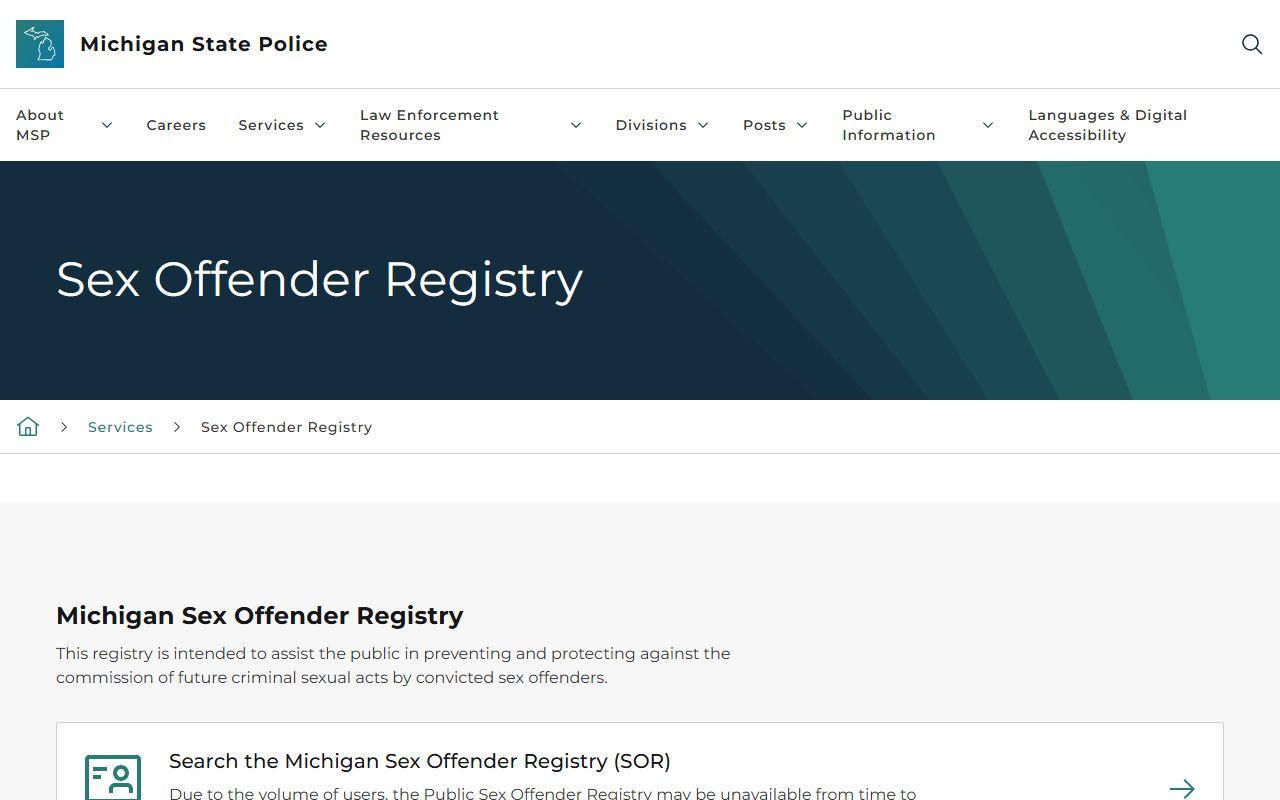
None of these statewide tools replaces a direct warrant check with the court or the sheriff, but they help a person understand which public record answers which question in Michigan.
What to Do If You Have an Outstanding Warrant
An outstanding warrant does not go away on its own, and ignoring it usually makes the situation worse. The practical path starts with identifying the likely court, then confirming whether the warrant can be recalled by payment, appearance, motion, or bond. Because arrest is a real possibility, planning the resolution with the right office, and often an attorney, protects a person from being surprised at the counter.
- Skip the third-party warrant sites and go straight to the court or the sheriff for accurate information.
- Identify the likely court: traffic, misdemeanor, and small criminal matters sit in the 77th District Court; felony and probation matters sit in the 49th Circuit Court; support and custody enforcement sits with the Friend of the Court.
- Call the court clerk for case status and ask whether the warrant can be recalled by payment, appearance, a motion, or posting bond.
- If custody is likely, call the jail at (231) 592-0156 or consult counsel before you appear.
- If the warrant ties to unpaid support or a Friend of the Court show-cause order, contact that office and file the correct motion or response.
- After the matter is resolved, ask how long the case and LEIN systems take to update, and request a written recall or order if one is available.
Important: Talk with a lawyer before turning yourself in on any Mecosta County warrant, because counsel can arrange bond, timing, and a court appearance that protect your rights.
Warrant Phone Scam Warning
Warrant fear is exactly what phone scammers exploit. In 2026 the Mecosta County Sheriff warned residents about callers impersonating deputies and threatening arrest over supposed warrants, missed jury duty, or unpaid fines. The callers demand immediate payment by gift card, wire transfer, or cryptocurrency, and they pressure the target to act before hanging up. The local report on that warning is available through Big Rapids News coverage of the sheriff scam alert.
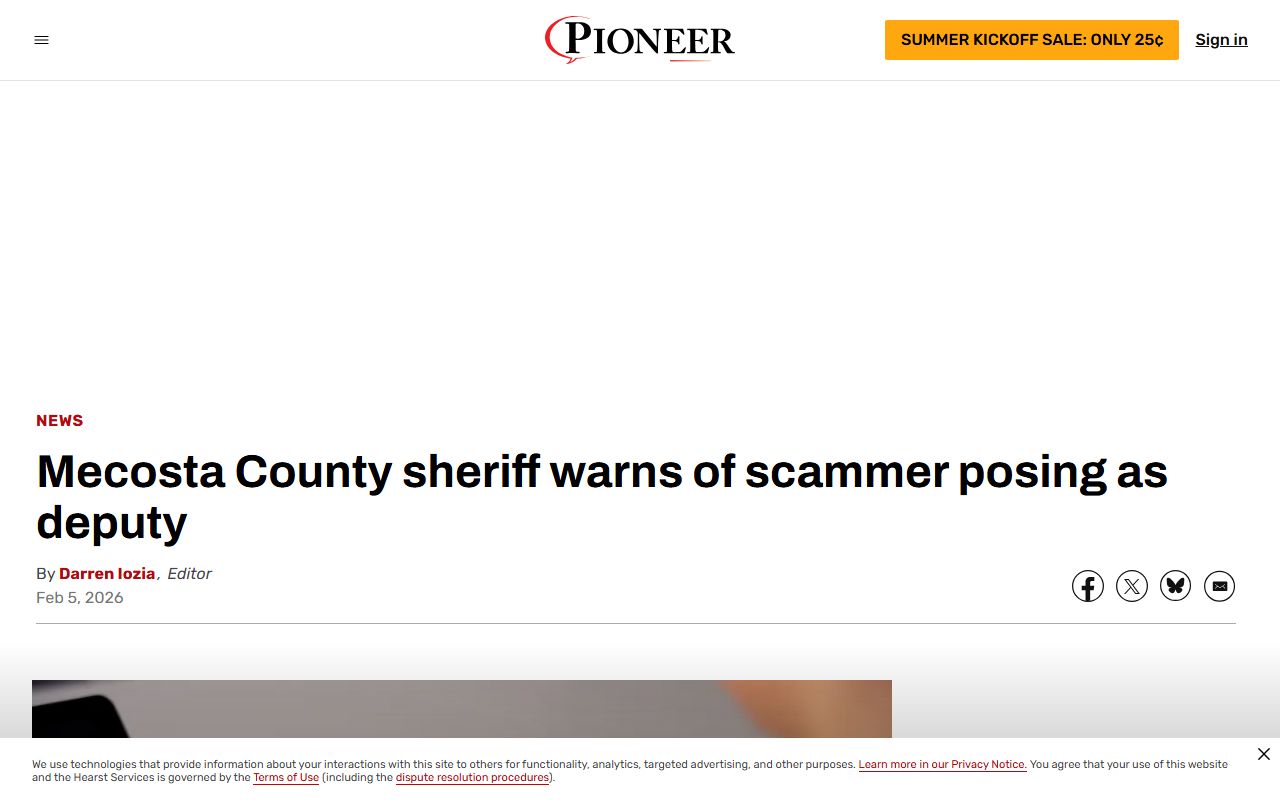
That news context matters for anyone checking a warrant, because a real warrant is verified with the court or the sheriff, never resolved by paying a caller.
Warning: No legitimate Mecosta County agency demands gift cards, wire transfers, or cryptocurrency over the phone to clear a warrant; verify any such claim directly with the court or the sheriff.
Restricted and Sealed Warrant Records
Not every warrant is open to public inspection, and Michigan law keeps certain records out of general view. Search warrants are frequently sealed while an investigation is active, so their contents may not be released until the case reaches a later stage. That confidentiality protects both the investigation and the people named in it.
Juvenile matters are handled through the Family Court Juvenile Division at (231) 592-0131, and those records are far more restricted than adult criminal or civil files. A warrant tied to a juvenile case should not be expected to surface through an ordinary public search. Federal warrants are separate again, moving through the United States District Court for the Western District of Michigan rather than the county courts. When a warrant record cannot be shared, staff can still explain the category it falls into and point a person toward the proper office or a written records request under Michigan's public access rules.